A Beginner's Guide to Watch Complications: From Chronographs to Perpetual Calendars
Step into the captivating world of fine watchmaking, where a timepiece is more than just an instrument for telling time it's a miniature universe of mechanical artistry. This guide demystifies "watch complications," the remarkable features that elevate a watch from a simple timekeeper to a masterpiece of engineering..
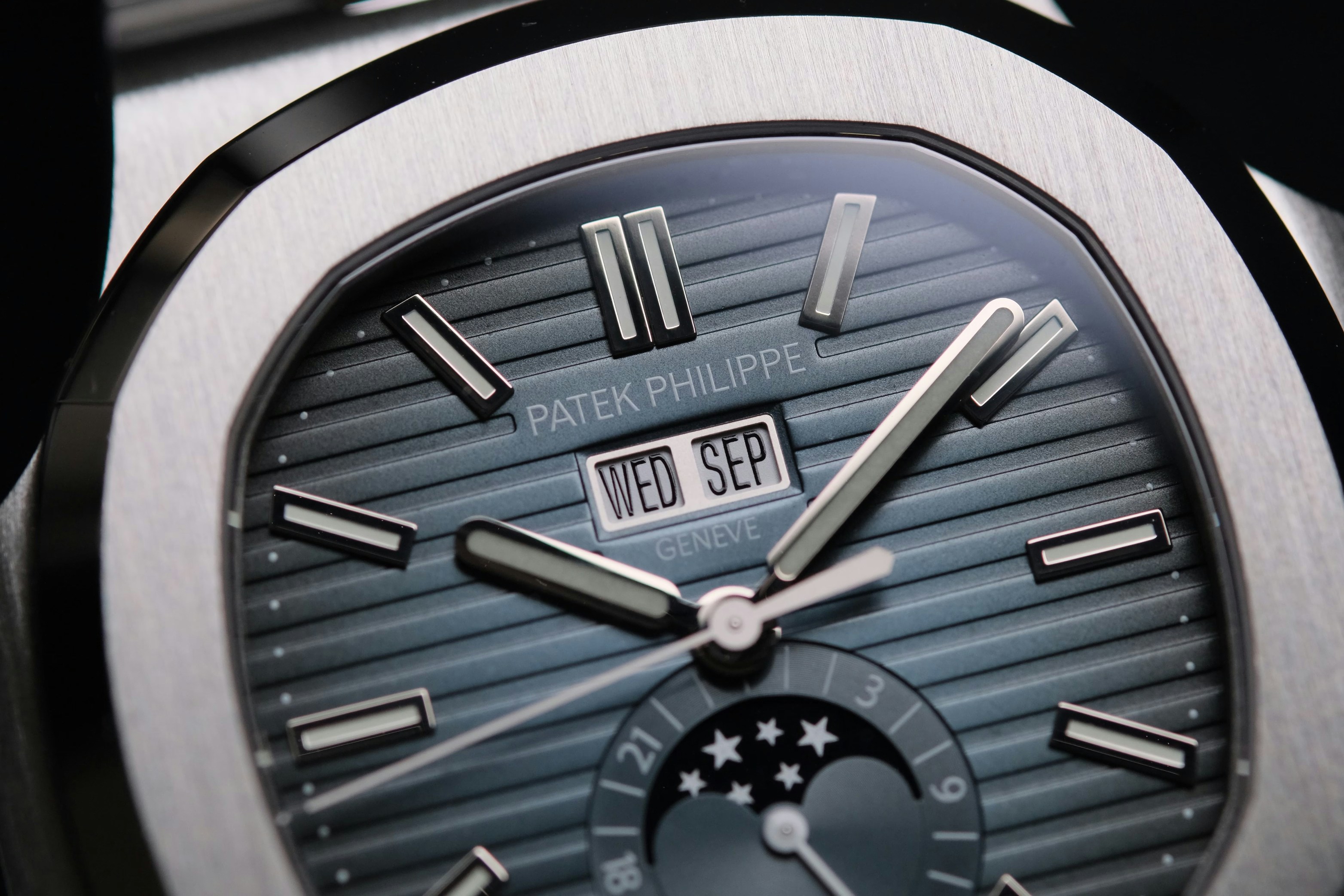
To hold a fine mechanical watch is to hold a miniature universe in your hands. Within its case, a symphony of hundreds of tiny, meticulously crafted components work in perfect harmony, not just to mark the passage of hours and minutes, but to capture the very rhythm of our lives. This intricate world is where we discover the soul of the machine: watch complications.
In horology, a watch complication refers to any function on a timepiece beyond the simple display of hours, minutes, and seconds.1 These watch features, far from being problems, are the pinnacle of watchmaking artistry, representing centuries of innovation and craftsmanship. The story of complications begins as early as the 15th century, when watchmakers first added striking mechanisms to chime the hours, born from a desire for more than simple time-telling. Early complications were often born of necessity; a Minute Repeater allowed one to tell time in the dark long before electric light, while a Moon Phase was an essential tool for sailors gauging tides.
Today, in an era of digital precision, these functions are no longer strictly necessary. Yet, these captivating watch complications are more prized than ever. This reveals a fundamental truth: their purpose has evolved from pure utility to a celebration of human ingenuity. Watch complications represent a fusion of art and engineering, a testament to a watchmaker's skill that continues to fascinate watch collectors and enthusiasts alike.8 This guide will take you on a journey through this world, from the practical to the poetic, exploring the mechanisms that make a watch more than just a timekeeper.
The Measure of Moments: Understanding the Chronograph
Among the most popular and recognizable popular watch complications, the Chronograph stands out for its practical utility and dynamic appearance. It is, at its heart, a watch with a built-in stopwatch, designed to measure elapsed time with precision.
More Than a Stopwatch: The Essence of the Chronograph
The word "Chronograph" literally translates from Greek as "time writer," a fitting name for a function that records intervals of time.10 The basic operation is intuitive. Chronograph watches typically feature two pushers on the side of the case. The top pusher starts and stops the central chronograph hand, while the bottom pusher resets it to zero.
On the watch dial, you'll usually find several smaller sub-dials, or "registers," that track the elapsed minutes and hours, allowing for the timing of longer events. A watch with two sub-dials is known as a "bi-compax" layout, while one with three is called a "tri-compax". It is crucial to distinguish a Chronograph, which is a specific function, from a Chronometer. A Chronometer is not a complication but a certification awarded to a watch movement that has passed rigorous accuracy tests conducted by an official body like the Contrôle Officiel Suisse des Chronomètres (COSC). While many luxury chronograph watches are also chronometers, the terms are not interchangeable.
Mastering the Race: Advanced Chronograph Complications
The world of chronograph complications requires deeper exploration to appreciate its most sophisticated forms, which were developed for professionals who demanded split-second accuracy under pressure.
The Flyback Chronograph, or retour en vol ("return in flight" in French), was originally conceived for pilots. In a standard chronograph, timing a new event requires three actions: stop, reset, and restart. Flyback chronograph watches streamline this into a single press of the reset button. The timer hand "flies back" to zero and instantly begins counting again, allowing a pilot to time consecutive navigational legs without losing a single moment.
The Split-Seconds (Rattrapante) Chronograph is often considered the king of this category. Recognizable by a third pusher (often at the 10 o'clock position) and two superimposed central seconds hands, it is designed to time multiple events that start together but end separately. Imagine timing two runners in a race. You start the chronograph, and both hands move together as one. When the first runner crosses the finish line, you press the split-seconds pusher to stop one hand, recording their time. The other hand continues its journey, ready to be stopped when the second runner finishes. This allows for the precise measurement of intermediate or "split" times, a feat of mechanical complexity that places it among the most prestigious watch complications showcased by master watchmakers.
Reading the Scales: Decoding the Bezel
The intricate markings on the bezel or outer dial of many chronographs are not merely decorative; these Chronograph scales transform the watch into a powerful analog computer. Each scale tells a story of the watch's intended purpose, a window into a time when such instruments were essential tools.
Tachymeter: This is the most common scale, inextricably linked to the world of motorsport. A Tachymeter is used to calculate speed based on travel time over a fixed distance. For example, if you time how long it takes a car to travel one mile, the chronograph hand will point to the car's average speed in miles per hour on the tachymeter scale. Iconic watches like the Rolex Daytona and Omega Speedmaster cemented the tachymeter's place in horological history.
Telemeter: With origins in military applications, the Telemeter scale measures the distance from an event that is both seen and heard. It works by timing the delay between light and sound. The classic example is a thunderstorm: start the chronograph when you see lightning and stop it when you hear the thunder. The hand will indicate your distance from the storm on the telemeter scale, often in kilometers or miles.
Pulsometer / Pulsograph: Often called a "doctor's watch," the Pulsometer (or Pulsograph) scale is calibrated to quickly measure a person's heart rate. Instead of counting beats for a full minute, a physician would start the chronograph and count a specific number of pulsations (typically 15 or 30, as indicated on the scale). Upon stopping the timer, the chronograph hand points directly to the patient's heart rate in beats per minute, a function that was invaluable before modern electronic devices.
The Rhythm of Time: A Journey Through Calendar Complications
Beyond timing events, one of the most practical functions a watch can offer is tracking the date. Date Complications are among the most common watch complications, yet they exist on a remarkable spectrum of complexity, from simple daily reminders to miniature mechanical computers that can map out the calendar for a century.
The Everyday Essentials: Date, Day-Date, and Beyond
The journey begins with the most ubiquitous of all complications: the date.
Date Window: A small aperture on the dial displaying the day of the month, from 1 to 31. This simple watch complication is a staple of modern watchmaking.
Large Date: Also known as a "Big Date" or grande date, this feature uses two separate discs to display the date in a larger, more legible format, enhancing readability.
Pointer Date: A charmingly vintage alternative, the Pointer Date uses a central hand to point to the date on a scale around the periphery of the dial.
Day-Date: The next step in functionality is the Day-Date, which adds the day of the week to the date display. The day-date complication displays both pieces of information, typically in separate windows. However, like the simple date, these mechanisms operate on a 31-day cycle and require the wearer to manually advance the date at the end of any month with fewer than 31 days.
The Ladder of Complexity: From Triple to Annual Calendars
As we ascend the ladder of horological intelligence, we find mechanisms that require less manual intervention.
The Triple Calendar, also known as a "complete calendar," displays the day, date, and month. These classic triple calendar watches often feature a beautiful, balanced dial layout and are sometimes paired with a moon phase display. While aesthetically pleasing, the mechanism is still mechanically unaware of the varying lengths of the months. It assumes every month has 31 days, meaning it requires manual correction five times a year (at the end of February, April, June, September, and November).
A significant leap forward came in 1996 when Patek Philippe introduced the Annual Calendar. This ingenious calendar complication mechanically differentiates between months with 30 and 31 days. An annual calendar watch only needs to be adjusted once per year: on March 1st. Its "memory" doesn't account for the unique length of February, but its practicality and relative affordability compared to its more complex cousin have made it one of the most popular watch complications for the modern collector.
The Pinnacle of Planning: The Perpetual Calendar Complication
At the apex of calendar horology sits the Perpetual Calendar complication. This is not merely a feature; it is one of the revered grand complications perpetual calendars represent, a testament to the genius of watchmaking. A Perpetual Calendar is a miniature mechanical computer, pre-programmed with the complex rules of the Gregorian calendar.
Its "mechanical memory" spans 1,461 days a full four-year leap year cycle. This allows the calendar complication automatically to account for months of 30 and 31 days, the 28 days of February, and even the 29th day in a leap year. As long as the watch remains wound, these remarkable perpetual calendar watches will display the correct date without any manual adjustment until the year 2100. The reason for this future adjustment is a quirk in the Gregorian calendar, which skips the leap year in century years not divisible by 400.
The history of this complication is rich, with Patek Philippe perpetual calendars setting the industry standard. The legendary Reference 1518, introduced in 1941, was the world's first serially produced perpetual calendar chronograph, a milestone that cemented the brand's legacy. The sheer complexity of the perpetual calendar display and its underlying movement, often comprising hundreds of parts, makes it a true hallmark of haute horlogerie and a grail for any serious men’s watch collector.
Navigating the Globe & Cosmos: Travel and Astronomical Complications
As our world became more connected, watchmakers rose to the challenge of tracking time across vast distances. At the same time, they continued a tradition stretching back millennia: capturing the dance of celestial bodies on the wrist.
Two Places at Once: The GMT/Dual Time Complication
The GMT/Dual Time complication is an indispensable tool for the modern traveler. It allows the wearer to track two time zones simultaneously. Named for Greenwich Mean Time (GMT), the historical prime meridian for global timekeeping, this time zone feature typically employs an additional hour hand that makes one full rotation every 24 hours. This hand points to a 24-hour scale on the bezel or dial, indicating a second "home" or reference time, while the main hands display the local time of the wearer's current location.
The World on Your Wrist: The World Timer
For the true global citizen, the World Timer offers a comprehensive view of time across the planet. While a GMT tracks one additional time zone, a World Timer displays the current time in 24 major cities, representing the 24 primary time zones, all at a single glance. This ultimate time zone complication typically features two rotating rings on the watch dial: an outer ring with city names and an inner 24-hour ring. By aligning your current city to the 12 o'clock position, you can instantly read the correct time anywhere in the world.
Celestial Poetry: The Moon Phase Display
One of the most visually poetic and ancient Astronomical Complications is the Moon Phase. This phase complication displays the current phase of the moon—new, first quarter, full, or third quarter—as it would be seen from Earth. The mechanism works via a rotating disc painted with two moons, situated beneath a crescent-shaped aperture on the dial. This disc is typically driven by a 59-tooth gear that advances one notch every 24 hours, accurately tracking the 29.5-day lunar cycle. More than just a function, a moon phase watch offers a beautiful, tangible connection to the celestial rhythms that guided timekeeping for centuries.
The True Rhythm of the Sun: Equation of Time
Among the rarest and most intellectually fascinating of all major watch complications is the Equation of Time (EOT). It displays the difference between "mean solar time" (the consistent 24-hour day on our clocks) and "apparent solar time" (the actual, slightly variable length of a day based on the Earth's elliptical orbit and axial tilt). This discrepancy can vary by up to approximately +14 to -16 minutes throughout the year. An EOT complication, often shown on a small sub-dial or via a secondary minute hand, connects the wearer not to our averaged, civilized time, but to the true, astronomical rhythm of our solar system.
The Apex of Artistry: Exploring Grand Complications
Beyond the practical and the poetic lies a realm of horology where the sole purpose is to push the boundaries of mechanical art. These are the grand complication timepieces, featuring mechanisms of breathtaking complexity that represent the pinnacle of a watchmaker's skill.
Defying Gravity: The Mesmerizing Tourbillon
The Tourbillon (French for "whirlwind") is one of the most captivating sights in all of watchmaking. Invented by Abraham-Louis Breguet in 1795, it is not a function that tells time, but a device designed to improve a watch's accuracy. It works by mounting the escapement and balance wheel the regulating organs of the watch inside a rotating cage that typically completes one revolution per minute. This constant rotation was intended to average out and negate the effects of gravity on the delicate components, a significant issue for pocket watches which were often kept in a single vertical position for long periods. While its practical necessity in a modern wristwatch is a topic of debate, the tourbillon complication remains an undisputed symbol of horological virtuosity, a mesmerizing mechanical ballet that commands deep respect and a high price.
The Sound of Time: Striking & Acoustic Complications
The ability to make time audible is perhaps the most magical of all complications. The Minute Repeater is a highly complex mechanism that chimes the time on demand. By activating a slide or pusher on the case, a series of tiny hammers strike gongs to sound out the hours (with a low tone), quarter-hours (with a two-tone sequence), and minutes (with a high tone).
Even rarer is the Grande Sonnerie. While a repeater chimes on demand, a Grande Sonnerie strikes the hours and quarters automatically en passant (in passing), much like a clock tower on the wrist. A Petite Sonnerie is a variation that chimes only the hours. These Striking & Acoustic Complications are considered among the most difficult to create, requiring the hand of a master watchmaker to assemble and tune.
The Unsung Heroes: Essential Supporting Functions
Some complications enhance the experience of owning a fine timepiece in other crucial ways.
Power Reserve Indicator: Known as Réserve de Marche, the power reserve complication acts as a fuel gauge for a mechanical watch. Displayed on a small sub-dial or linear scale, Power Reserve Indicators show the amount of energy remaining in the mainspring, indicating how many hours or days the watch will continue to run before it needs to be wound again.
Retrograde Display: A Retrograde is an elegant and dynamic way to display information. Instead of a hand moving in a full circle, a retrograde hand sweeps across an arc-shaped scale. When it reaches the end of the scale, it instantly snaps back to the beginning to start its count again. This visually dramatic "jump" can be used for the date, day, or other functions, adding a theatrical flair to the dial.
The mastery of one complex mechanism often enables and inspires the integration of another. A perpetual calendar chronograph combines two major complications, while a perpetual calendar tourbillon unites an astronomical function with a regulating device. This ripple effect of innovation culminates in the creation of true grand complication timepieces, such as the legendary patek philippe grand complications, which may house a minute repeater, split-seconds chronograph, and perpetual calendar all within a single case an interconnected ecosystem of mechanical genius.
A Timeless Fascination
Our journey through the world of watch complications takes us from the racetrack timing of a Chronograph to the celestial poetry of a Moon Phase, from the globe-trotting utility of a GMT to the intellectual marvel of a Perpetual Calendar. We have seen how these intricate mechanisms evolved from practical tools into profound expressions of artistry and tradition.
In an age where a smartphone can perform these watch functions with flawless digital precision, the enduring appeal of a mechanical complication lies in its humanity. It is a tangible connection to centuries of innovation, a celebration of the hundreds of patient hours a watchmaker invests to bring a static collection of gears and springs to life. These watch complications showcase not just time, but the timeless pursuit of perfection, a mechanical poetry that captures our imagination and invites us to look closer, appreciate deeper, and continue exploring the fascinating universe on our wrist.